method
How to Use a Honing Steel
Realign a slightly rolled knife edge safely, recognize when honing works, and know when the knife needs sharpening instead.
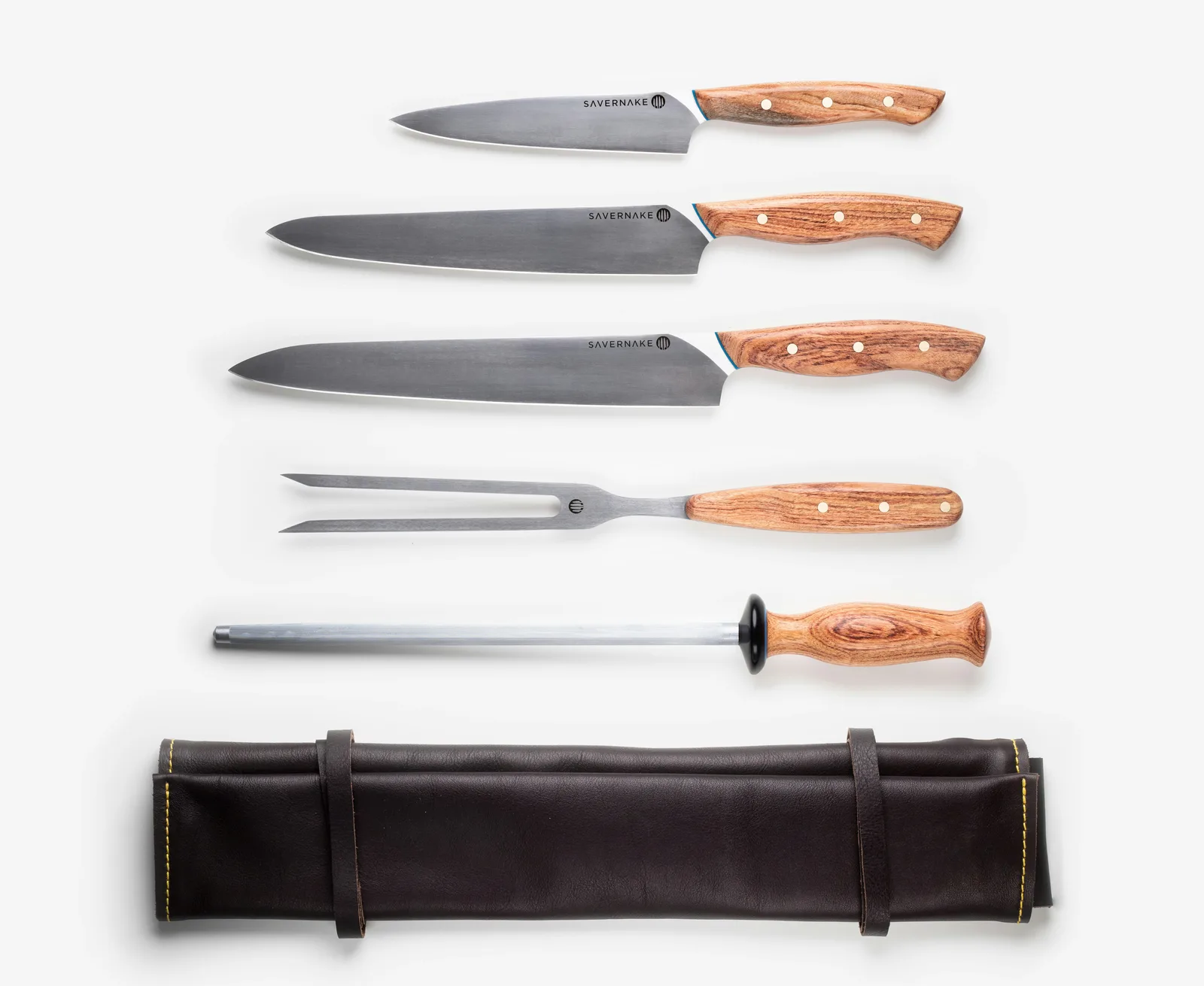
A honing steel can make a previously sharp knife feel clean and predictable again, but it does not create a new edge. Normal use can bend the knife's very thin edge slightly out of line. A few controlled passes on a rod may straighten it. Once that edge has worn round, the knife must be sharpened.
Choose the right rod
A smooth steel rod is gentle and good for routine alignment. A fine ceramic rod can hone and remove a small amount of metal. Deeply ridged or coarse rods work aggressively and can wear an edge faster than expected.
The rod should be at least as long as the knife blade. Very hard, thin, or single-bevel knives may require a maker-specific method and can chip on a coarse steel. When in doubt, use a fine ceramic rod or skip the rod and follow the knife maker's advice.
Use the planted method
Place a folded towel on a stable cutting board. Hold the rod vertically with its tip planted on the towel. Put the heel of the knife against the top of the rod at approximately the angle already ground into the edge. For many Western kitchen knives this looks like roughly 15 to 20 degrees, but matching the existing bevel matters more than chasing a number.
Draw the blade down and toward you so the full edge, from heel to tip, passes lightly along the rod. Alternate sides. Four to six slow passes per side are usually enough. Use less pressure than it takes to slice a carrot.
The dramatic midair motion seen on television is not a requirement. A planted rod is slower, easier to control, and keeps both the knife and rod away from the body.
Avoid the common failures
Hard pressure does not make honing more effective; it can round, chip, or unevenly wear the edge. A changing angle polishes a wide area instead of aligning the very edge. Excessive passes waste time and may remove unnecessary metal, especially with ceramic or diamond-coated rods.
Wipe the blade after honing and wash it before food preparation. Clean a steel rod with warm soapy water and dry it promptly. Ceramic rods collect dark metal streaks and may need a nonabrasive cleaner according to their instructions.
Hone when a good edge becomes slightly less eager, not before every use by habit. For cutting-board, storage, and sharpening guidance, continue with How to Keep Kitchen Knives Sharp.