method
How to Keep Kitchen Knives Sharp
Keep a useful edge longer with the right cutting surface, storage, honing, and a realistic sharpening routine.
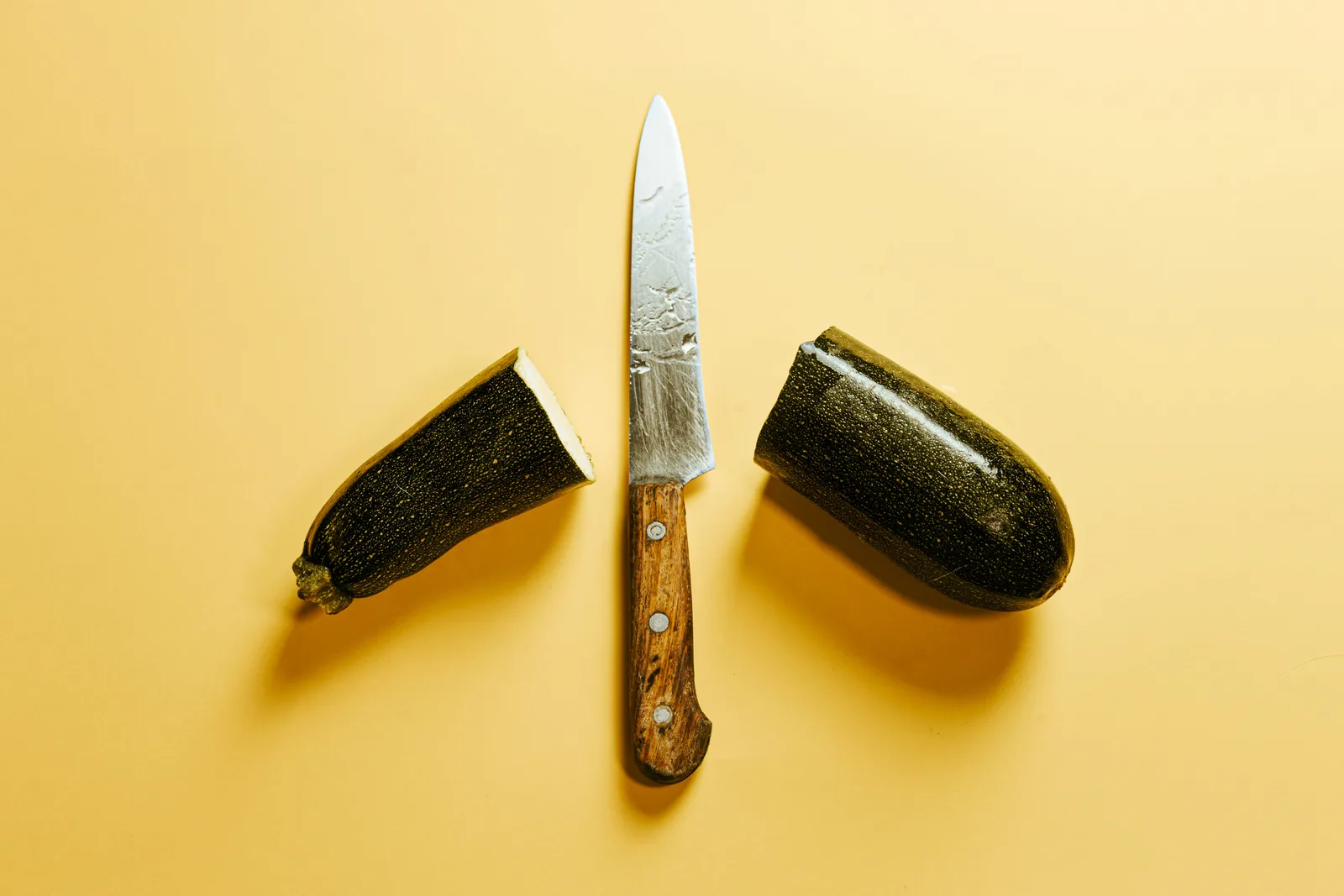
Knife edges fail in two ways: the thin edge bends out of alignment, or it wears away and becomes rounded. Honing can straighten a slightly rolled edge. Sharpening removes metal to create a new one. Knowing the difference prevents months of polishing a knife that actually needs sharpening.
Prevent avoidable dulling
Cut on wood, rubber, or plastic—not glass, stone, ceramic, a countertop, or a plate. Use the knife to slice forward or down rather than twist through hard food. Scrape chopped ingredients with the spine or a bench scraper instead of dragging the cutting edge sideways across the board.
Wash the knife by hand and dry it promptly. A dishwasher exposes the edge to other utensils, aggressive detergent, and uncontrolled movement. Do not leave a knife hidden in a sink where the edge can strike metal and a hand can find it unexpectedly.
Store knives in a block, on a secure magnetic strip, in a drawer insert, or with an edge guard. A loose drawer lets edges collide with utensils and makes reaching inside dangerous.
Test the edge safely
Use normal food as the test. A useful edge should begin cutting a ripe tomato or onion skin with light forward motion instead of crushing or sliding. It should cut herbs cleanly rather than leaving bruised strands attached.
Do not run a finger along the edge. If you inspect by touch, place a clean, dry finger beside the edge and move across it with extreme care—never along its length. A food test is safer and more relevant.
Hone only when it helps
A honing rod does not replace sharpening. Use a smooth or fine ceramic rod for a few controlled strokes when a previously sharp knife feels slightly less clean. Match the knife's existing edge angle, move slowly, and keep the rod's tip planted on a towel-covered board if holding it in the air feels unstable.
Coarse, ridged steel rods can remove more metal than expected. Very hard, thin Japanese-style edges may chip on an aggressive steel, so follow the knife maker's guidance or use a fine ceramic rod.
If honing produces no clear improvement after a few passes, stop. The edge is worn and needs sharpening.
Choose a sharpening method
A pull-through sharpener is fast and easy. Choose one designed for your knife's edge angle and use light pressure. Inexpensive carbide models remove metal aggressively, so they are better as a practical compromise than as a frequent ritual.
A whetstone offers control and can produce an excellent edge, but it takes practice. A medium stone around 800 to 1,000 grit is enough to restore most ordinary dull knives; a finer stone can refine the edge. Learn on an inexpensive knife and maintain a steady angle rather than chasing speed.
A professional sharpening service is often the best value if you own only a few knives or do not want another skill and tool to maintain. Ask whether the service uses belts, wheels, or stones and whether it regularly handles your type of knife.
Sharpen when food tests show the edge is truly dull, not by a rigid calendar. For many home cooks that means a few times a year, with frequency depending on use, steel, technique, and cutting board.
After sharpening
Wash and dry the blade to remove metal residue. Test it on food, then return to normal technique. An extremely polished edge is not the goal; a controllable edge that starts cuts cleanly is.
If your knife is uncomfortable even when sharp, compare the differences between kitchen knife types. If edges dull unusually fast, check how to choose a cutting board.