method
How to Cook a Complete Meal With One Skillet
Sequence ingredients by heat, moisture, and cooking time so one pan produces a complete dinner.
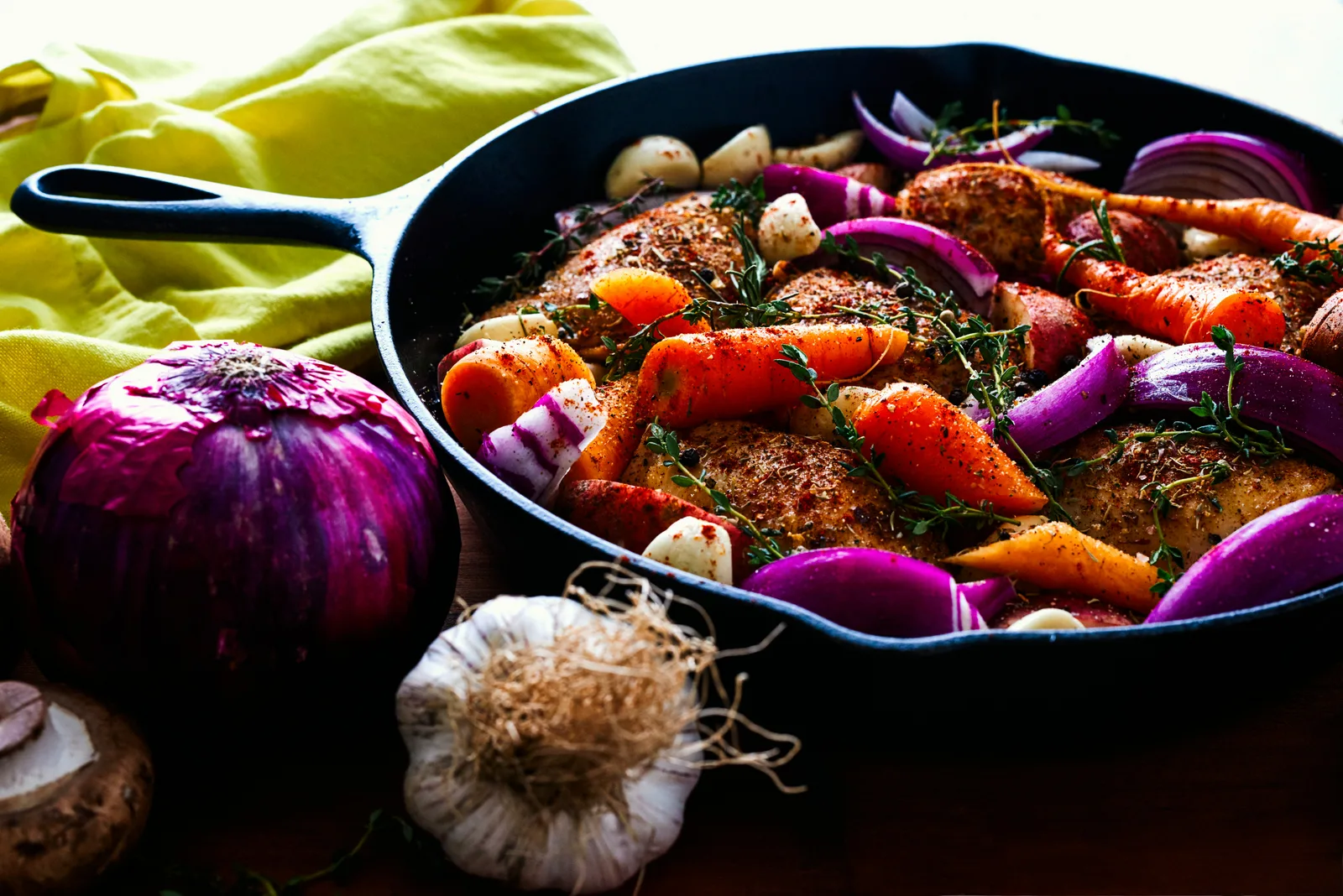
One-skillet cooking is a sequencing problem. Ingredients need different conditions, so “put everything in the pan” usually produces pale protein, watery vegetables, or a burned sauce.
Plan the order backward
Decide what should be crisp, what should be tender, and what can become part of the sauce. Crisp ingredients need early contact with a relatively dry pan. Aromatics need moderate heat. Dense vegetables need time or a steaming phase. Delicate greens and acidic finishes belong near the end.
The reliable sequence
- Brown the main protein or substantial ingredient in an uncrowded pan.
- Remove it to a clean plate before it is fully finished if later simmering will complete the cooking.
- Cook sturdy vegetables in the remaining fat. Add a spoonful of oil if the pan is dry.
- Lower the heat and cook aromatics or spices without burning the browned residue.
- Add a small amount of liquid and scrape up the brown bits.
- Return earlier ingredients and cover briefly if dense vegetables need steam.
- Uncover to reduce the liquid, then add delicate vegetables and final seasoning.
Control carryover
The first ingredient keeps cooking when it returns. Chicken thighs tolerate this well; shrimp and thin fish do not. Remove delicate proteins earlier and add them only for the final minute.
Starchy ingredients can thicken the pan liquid. Potatoes need enough liquid and time to become tender, but excess liquid at the end prevents crisp surfaces. Par-cooking dense vegetables in the skillet with a lid can solve both problems.
Preserve contrast
One pan does not mean one texture. Hold back crisp crumbs, raw herbs, pickles, or a spoonful of browned ingredients for the top. Add acid after reducing so you can judge the final concentration.
Food safety
Keep the plate that held raw meat separate unless it is washed before the cooked food returns. Use a thermometer for poultry and thick pieces rather than judging only by color.
See the sequence applied in One-Pan Chicken Thighs, Cabbage, and Potatoes.