Applied recipe
Inexpensive Tomato Pasta Sauce
A flexible pantry sauce that demonstrates browning, concentration, seasoning, and acidity.
- Servings
- 6
- Prep
- 10 min
- Cook
- 40 min
- Est. per serving
- $1.33
Estimated $8.00 total based on prices observed at Area discount grocer in Tennessee on 2026-07-21. Estimate includes one pound of pasta and assumes salt and cooking oil are available.
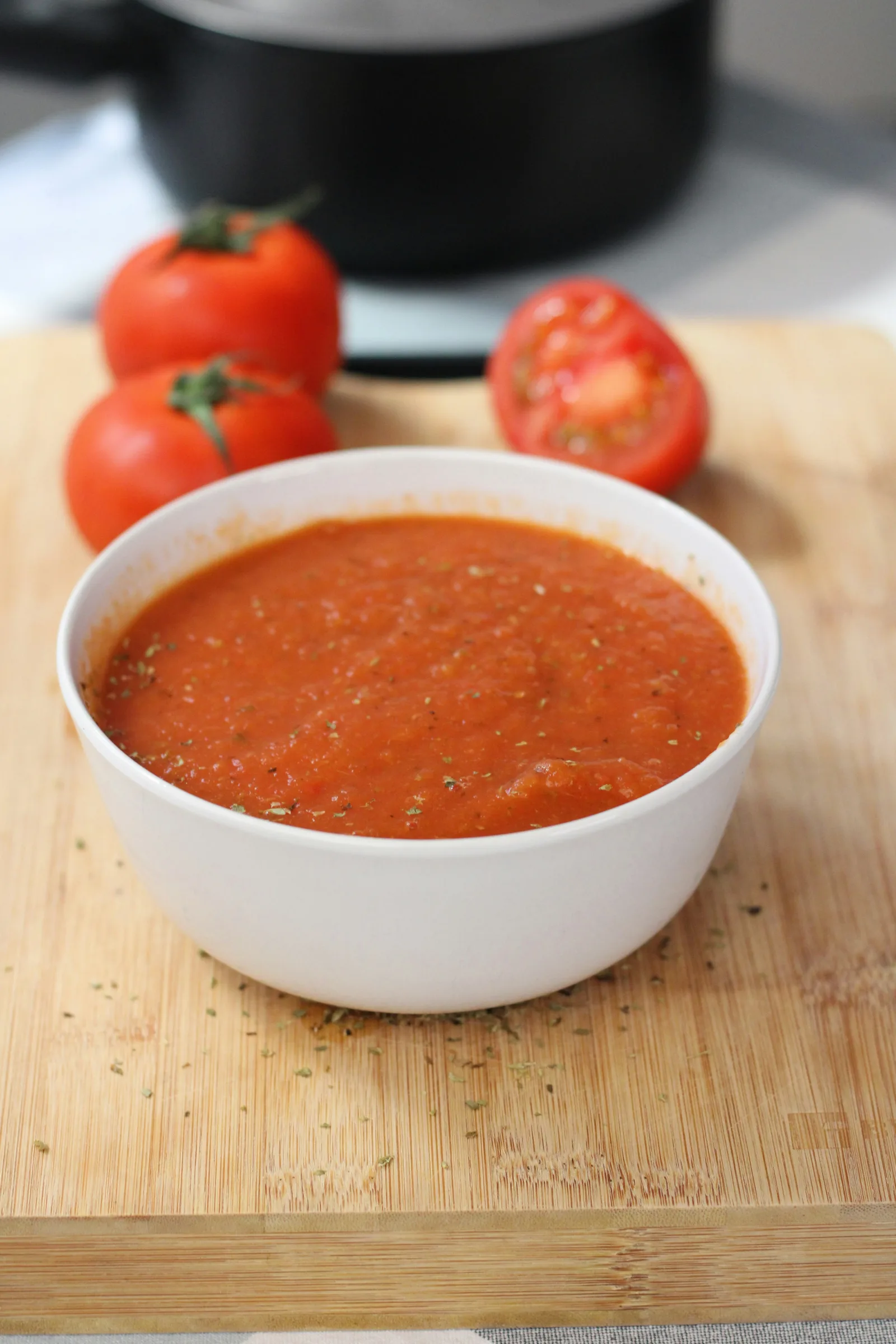
This sauce uses inexpensive canned tomatoes but does not treat them as finished sauce. Onion browning, toasted tomato paste, controlled reduction, and a final acid adjustment build flavor without a long ingredient list.
Needed equipment
- Medium saucepan or deep skillet
- Spoon or other heat-safe stirring utensil
- Knife and cutting surface, unless using pre-chopped ingredients
- Heat-safe bowl or storage container for holding the finished sauce while the same pan cooks the pasta
Optional equipment
- Second pot for boiling the pasta while the sauce finishes
- Colander for easy draining; a lid held slightly ajar can drain the pasta instead
- Wooden spoon, which is comfortable for scraping browned tomato paste
Ingredients
- 2 tablespoons olive or neutral cooking oil
- 1 medium onion, finely chopped
- 3 cloves garlic, chopped
- 2 tablespoons tomato paste
- 1 teaspoon dried oregano or Italian herb blend
- Pinch of red pepper flakes, optional
- 1 can (28 ounces) crushed or whole peeled tomatoes
- ½ cup water
- Salt and black pepper
- 1 to 2 teaspoons vinegar or lemon juice, as needed
- 1 pound pasta
Instructions
- Heat the oil over medium heat. Add the onion with a small pinch of salt and cook until soft with golden edges, 8 to 12 minutes.
- Add the garlic, oregano, and pepper flakes. Stir until fragrant, about 30 seconds.
- Add the tomato paste. Cook, stirring, until it darkens from bright red toward brick red and begins leaving brown residue on the pan, 2 to 4 minutes.
- Add the tomatoes and water. If using whole tomatoes, crush them with the spoon. Scrape the pan clean.
- Simmer partly uncovered, stirring occasionally, until the sauce thickens and a spoon drawn across the pan leaves a trail that closes slowly, 20 to 30 minutes. If working with one pan, transfer the sauce to the heat-safe container and rinse the pan. If using an optional second pot, start the pasta while the sauce simmers.
- Cook the pasta in salted water. Reserve a cup of pasta water before draining; a colander is convenient, but the water can also be poured off carefully while holding a lid slightly ajar with dry oven mitts.
- Taste the sauce. Add salt in small amounts. If it tastes heavy or one-dimensional, add vinegar a few drops at a time.
- Return the drained pasta to the pan and combine it with enough sauce to coat. Add reserved pasta water by spoonfuls until glossy rather than dry.
Sensory indicators
The tomato paste should smell sweet and roasted, not sharp or burned. Finished sauce should cling to a spoon without sitting like paste. After acid is added, tomato aroma should seem clearer even if the sauce does not taste sour.
Common mistakes
If the paste turns black, discard the burned portion and clean the pan. If the sauce spits aggressively, lower the heat and use a lid slightly ajar. If it tastes watery, reduce before adding more salt.
Substitutions
Diced tomatoes produce a chunkier sauce and may need longer reduction. One teaspoon garlic powder can replace fresh garlic when added with the dried herbs. Grated carrot adds sweetness and body, but cook it with the onion rather than using it as a last-minute fix.
Storage and reheating
Refrigerate sauce for up to 4 days or freeze in meal-size portions for about 3 months. Reheat gently with a splash of water. Store pasta separately when possible because it continues absorbing sauce.
Variations
Add cooked lentils or white beans for substance, browned mushrooms for savory depth, or frozen spinach near the end. Use the same sauce on polenta, rice, or baked vegetables.