lesson
What a Cheap Electric Hand Mixer Does Well
Use an inexpensive hand mixer for whipped cream, meringue, batters, and other jobs where speed adds air.
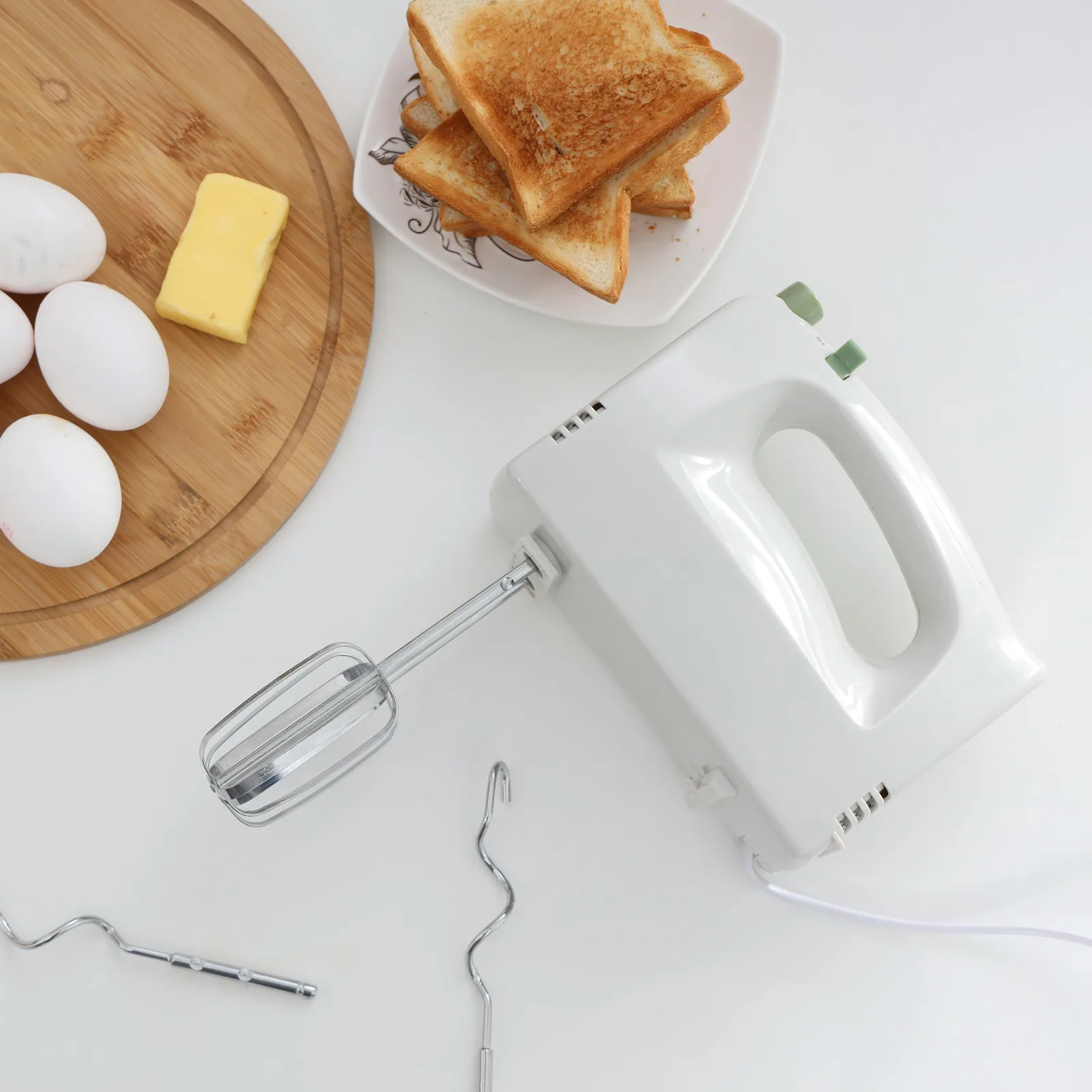
An electric hand mixer performs one simple job extremely well: it moves beaters faster than your arm can for longer than your arm wants to. That speed traps air, breaks up soft ingredients, and makes a few impressive foods possible without a stand mixer.
A basic mixer is enough. Multiple sturdy speed settings, beaters that eject cleanly, and a shape that can rest without tipping matter more than a huge wattage claim or many attachments.
Use speed to add air
For whipped cream, chill the cream and, if convenient, the bowl and beaters. Start on low so liquid stays in the bowl, then increase to medium-high. Soft peaks slump over and are good for folding or spooning. Firm peaks hold their shape for topping. Stop as soon as the texture is right; continued beating turns cream grainy and eventually makes butter.
For meringue, use a clean, grease-free bowl and beaters. Separate eggs while cold, then let the whites lose some chill. Beat until foamy before adding sugar gradually. The finished foam should look glossy, and sugar should feel mostly dissolved when a little mixture is rubbed between clean fingers. Fat, yolk, and undissolved sugar all weaken the structure.
For butter and sugar, use softened butter, not melted butter. Beat until the mixture is lighter in color and texture. This creates tiny air pockets that help cakes and cookies rise.
Start low and move around
Put the beaters into the food before switching on. Begin at the lowest speed, then increase after dry ingredients or liquids are incorporated. Keep the beaters moving around the bowl instead of excavating one spot. Switch off before lifting them out.
Use a deep, stable bowl with enough empty space for expansion. Glass and metal resist grease and scratches better than many plastic bowls when making meringue. Keep the cord, loose clothing, spatulas, and fingers away from moving beaters.
Know when not to use it
A mixer can overdevelop gluten in muffins, pancakes, and quick breads. Once flour is added, mix only until dry streaks mostly disappear and finish with a spatula. Thick bread dough can strain a cheap mixer unless it was designed for dough hooks and the batch is within its rating.
A whisk works for eggs, dressings, and small amounts of cream. A jar works for vinaigrette. Buy a mixer when you want to make whipped cream, meringue, cakes, or frosting more than once or twice. It is a convenience tool, not an admission fee for cooking.
For the other tools that earn their footprint, see The Only Kitchen Equipment You Actually Need.